Recognising Masking in the Classroom

November 2, 2025

A Call for Change in How We Support Autistic Students


In many classrooms, autistic children are silently struggling. Their difficulties often go unnoticed because of one complex and widely misunderstood behaviour: masking.

Masking refers to the strategies autistic individuals use to hide or suppress their natural traits in order to fit into neurotypical environments. As teachers, understanding masking is essential. Without this awareness, we risk misinterpreting a student’s behaviour, overlooking their needs, and unintentionally contributing to emotional distress.

It is not uncommon for teachers to be surprised when parents describe how their child melts down at home or struggles significantly with anxiety and exhaustion. In school, the same child might appear quiet, compliant or even cheerful. This disconnect is often because the child is masking throughout the school day, using enormous mental and emotional effort to imitate neurotypical behaviours and suppress their authentic responses.

There are different forms of compensation that autistic individuals use in social environments. Shallow compensation includes mimicking gestures or facial expressions, suppressing stimming behaviours, or avoiding social interaction altogether. This can be categorised under masking. Deep compensation, on the other hand, involves more complex strategies for managing conversations or interpreting social cues. Both forms aim to increase acceptance and avoid stigma, but they come at a cost.

In 2022, Cook et al. identified four categories of autistic camouflaging, with masking being one of them. Masking, they noted, involves avoiding speaking about oneself, minimising sensory-seeking behaviours, and presenting with a conventional physical appearance. This kind of camouflage is not simply about being shy or introverted. It is a survival strategy, often developed over years, to cope with environments that do not recognise or accept neurodivergent ways of being.

The toll it takes is profound. Bradley et al. (2021) explored the mental health impact of masking and found that participants described physical pain, exhaustion, frequent crises and headaches. Alarmingly, between 55 and 94 percent of participants experienced challenges in mental health related to masking. These are not small numbers. They speak to an urgent need for change in how we approach education and support for autistic students.

We autistics often become experts in copying, imitating and reproducing neurotypical behaviour. Over time, many of us internalise the idea that we are only acceptable when we hide who we are. This pursuit of belonging by suppressing our true selves leads to long-term harm and deep disconnection from identity.

This is why schools must become safe environments where autistic and other neurodivergent children are encouraged to be themselves. Education should not be about shaping children into someone they are not for the sake of compliance. Instead, we need to help them understand their sensory profiles, embrace their preferences and take pride in their unique minds. Self care, special interests and connection to identity should be part of the curriculum.

We also need to re-evaluate the interventions we use. Behavioural therapies that focus solely on compliance and discourage authentic expression are not the solution. They often deepen the disconnect between the child and their sense of self. Instead, we must support children in learning how their minds and bodies work, what they need to feel safe and regulated, and how to express those needs confidently and without fear.

Understanding masking is not about labelling children or excusing behaviour. It is about seeing the whole child and recognising the hidden effort many autistic students put into simply getting through the day. With this understanding, teachers can respond with compassion, create inclusive classrooms and build real connections with their students.

This is the foundation of truly inclusive education — one that recognises difference as something to be valued, not corrected.


References
-
Bradley, L., Shaw, R., Baron-Cohen, S., & Cassidy, S. (2021). Autistic adults’ experiences of masking and its impact on wellbeing. Autism in Adulthood.
-Cook, J., Crane, L., Bourne, L., & Mandy, W. (2022).
Self-reported camouflaging behaviours by autistic people during everyday social interactions.
- Howe, S. J., Hull, L., Sedgewick, F., Hannon, B., & McCorris, C. A. (2023).
Understanding camouflaging and identity in autistic children and adolescents using photo-elicitation.
-Sánchez, B. (2025).
Camuflaje en autismo, altas capacidades y TDAH
By Sabrina Domínguez March 6, 2026
In recent years, schools across Ireland have opened more and more autism classes. This is genuinely positive progress. For many families, these classes mean access to support that previously simply didn’t exist. They represent recognition, awareness, and a willingness to adapt our education system to meet diverse needs. But while celebrating this progress, I often find myself wondering: what about the other neurodivergent students? What about ADHDers? What about twice-exceptional learners? What about students whose needs don’t fit neatly into one category? Neurodiversity is much broader than any single label. Autism classes can provide essential support for many students, but the wider school environment is still often built around a very narrow idea of how children should learn, move, focus, and behave. When that happens, teachers, even the most dedicated ones, are left trying to bridge the gap between students’ needs and environments that were never designed with them in mind. And there are so many incredible teachers in Ireland doing exactly that every day. But sometimes the issue isn’t teaching practice. Sometimes the issue is the environment itself. Equity in education doesn’t begin and end in the classroom. It extends to the entire school building. Lighting, noise levels, movement spaces, sensory regulation areas, predictable routines, flexible seating, quiet corners, and safe places to decompress can make an enormous difference. For many neurodivergent children, these environmental factors determine whether they can truly engage in learning or simply try to get through the school day. This is where the concept of Universal Design for Learning (UDL) becomes so powerful. Universal design asks a simple but transformative question: What if we designed schools from the start to work for as many learners as possible? Instead of creating systems that fit only one type of student and then adding accommodations later, universal design encourages us to build environments that naturally support a wide range of minds. Flexible spaces. Multiple ways to engage with learning. Opportunities for movement. Different ways to show understanding.  When schools embrace this approach, everyone benefits, not just neurodivergent students. Autism classes are an important step forward, and the teachers working in them, and in mainstream classrooms, deserve enormous recognition. But the long-term goal should be broader: schools designed with neurodiversity in mind from the start, where different ways of thinking, learning, and being are expected rather than accommodated. Because when we create environments that support different kinds of minds, we don’t just make school more accessible. We make it better for everyone.
February 1, 2026
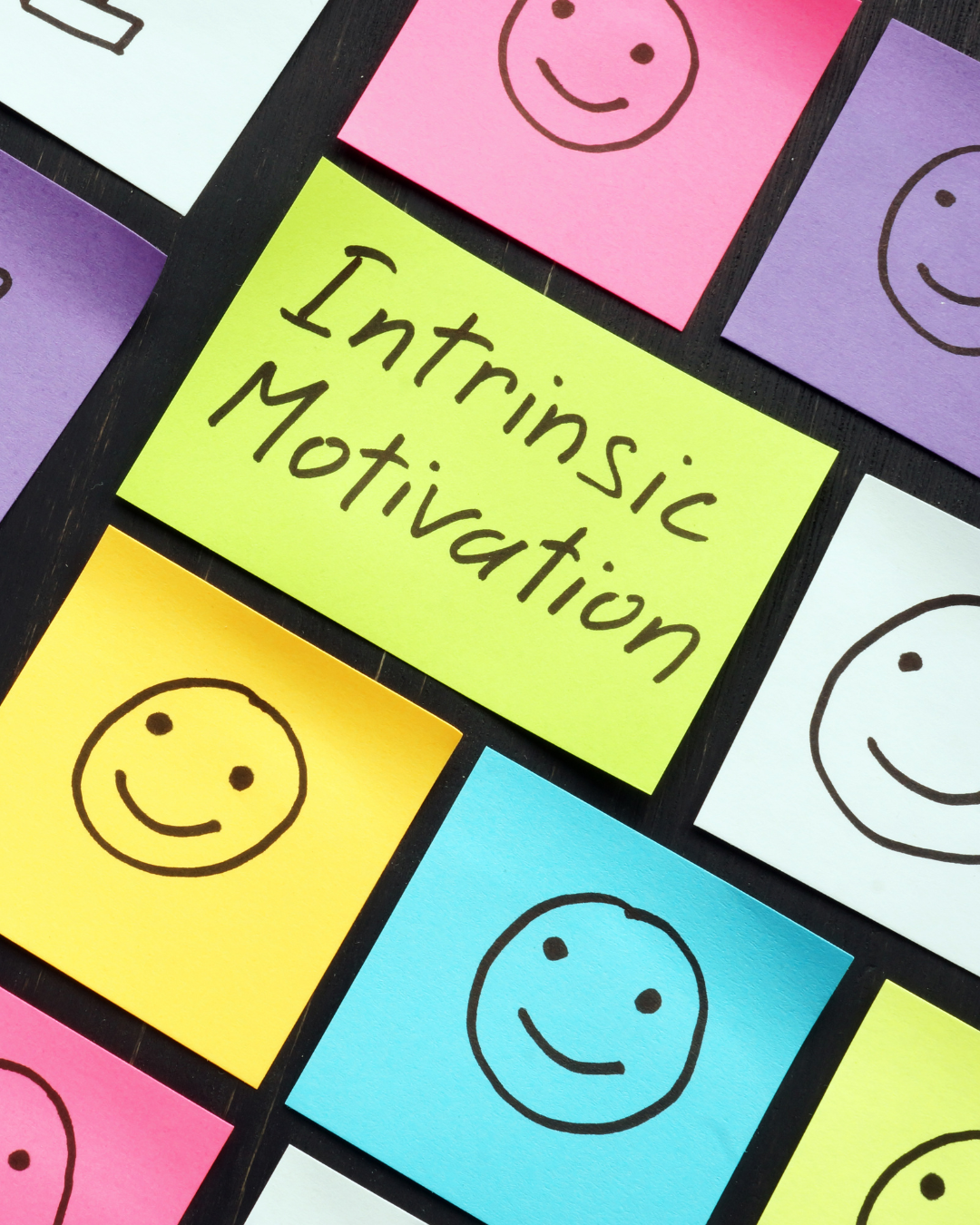
Too often, especially with neurodivergent children, we fall into the trap of using rewards and praise as tools to manage behaviour. Stickers, points, praise, "good girl", "well done", "good job" — these may seem harmless, even helpful. But they risk teaching children to perform for approval, rather than to develop a deep, personal connection to what they do and why they do it. We are not raising children to please teachers, parents or therapists. We are guiding them to become emotionally intelligent, self-aware adults who know how to care for themselves, not because someone told them to, but because they value themselves. This is intrinsic motivation. And it matters. As adults, how many of us go to work each day simply to earn money. How many dread Mondays, feel disconnected from their work, and live for the weekend. This is the cost of relying on external rewards. When work is disconnected from meaning, we lose motivation, fulfilment and identity. So why are we raising children to follow the same path? Instead, let us raise them to do things because they matter to them . Let us support them in discovering their own sense of accomplishment and pride. Rather than saying "good girl" or "well done", how about: "You’ve made it. You should be so proud." "I can see how hard you worked. I’m sure you are thrilled with what you’ve done." These kinds of responses help children locate pride and satisfaction within themselves , not in the reactions of others. We want them to feel the gratitude of taking care of themselves, and the joy of achieving something for their own growth, not to earn someone else's approval. This is not just theory. This is backed by decades of research. In Drive: The Surprising Truth About What Motivates Us , Daniel H. Pink explains that intrinsic motivation, autonomy, mastery and purpose, is far more powerful and sustainable than external incentives. Likewise, research by Amabile, Hennessey and Grossman (1986) in the Journal of Personality and Social Psychology showed that expected rewards can actually reduce creativity and internal motivation. Jane Nelsen’s Positive Discipline also offers a compassionate, respectful and evidence-informed approach to helping children grow into capable and resilient adults, without bribes, punishment or empty praise. Children are not here to make our lives easier. They are here to grow into people with a strong self-concept, rooted in their own values. Our job is not to control them, but to support them in becoming themselves. Let us stop asking, “How can I get them to do it?” Let us start asking, “How can I help them want to do it — for themselves?” Because in the end, this is not about compliance. It is about becoming.  Recommended reading: Drive by Daniel H. Pink (2010) Positive Discipline by Jane Nelsen (2016) Amabile, T. M., Hennessey, B. A., & Grossman, B. S. (1986). Social influences on creativity: The effects of contracted-for reward. Journal of Personality and Social Psychology
December 8, 2025
Very often, when we talk about neurodivergent childhood, we do it from a pity view. From a framework that teaches the child about their "lackings" and their deficits. But rarely are we willing to assess the environment where that child lives, or even the educational system itself. This is not just about using neuroaffirming language or showing real inclusion. We need to go further and deeper into the rabbit hole. What is this doing to the child’s self-esteem or the child’s self-concept? What about their ability to connect with themselves and respect their needs? What about teaching them from a framework that promotes genuine well-being and good mental health? Personal development is possible, even when your neurology is different, just like everyone else’s. Somehow yours is more interesting, and everyone is pointing at you. But yes, there is power within you; there is a personality and an identity worth treasuring. And no, you are not broken, you are not a default. You are marvellous! Even though your nervous system gets hurt in this crazy, fast, loud world, you have the amazing power to connect with nature far beyond typical norms. I’m talking about true connection, like looking at a landscape and crying out of wonder. You can feel your heart fill with authentic joy while doing something as simple as soaking your hands in dried lentils! But there is no time for this in the modern world. You are not given the time to allow your mind to get hyper focused, no time to adapt the curriculum, no time to present materials from a monotropic perspective. And you are not certainly given the time to stim, because, hey, it looks too weird. And remember: if you are moving, you are not paying attention. And then is when it truly hits you! You feel like you have to step aside, you feel like you cannot be yourself, like you don’t belong. The message you receive is: The system is not broken. You are. Who can fight this strong statement, when everyone is agreeing: your teachers, your doctors, your aunts and uncles, and now even mum and dad? Because the pressure is too much. It gets to everyone. What can we do to help you believe again? To give you permission to reconnect with yourself? Would you believe us if we tell you that you are amazing? That the power lies within? You just need to trust. And be patient. Please, believe us when we tell you they will get there eventually.  In the meantime, try to protect yourself. Because you are worthy of true love.

Contact Us Today

Call us today to discuss your needs